
Is the PM Surya Ghar Yojana Right for You? A Comprehensive Guide
The new government plan is PM Surya Ghar Yojana/ PM Suryoday Yojanaor PM Surya Ghar Yojana Free Electricity Scheme. It is calling for action. It aims to make clean energy more accessible.
Its purpose?
Helping low- and middle-income families reduce their electricity bills.
Surya Ghar Yojana aims to promote solar power and empower households.
- Solar Power for the Masses: Many homes across India will get solar panels on their roofs. This big goal wants solar energy to be a popular choice for many people.
- Electricity Bill Relief: Making their electricity can save folks’ money each month. The program aims to give up to 300 units of free electricity monthly, helping cut costs.
- Sustainable Development: The goal of Sustainable Development is to use more solar power. Solar power is clean and renewable. It’ll make India less reliant on other energy sources and aid a sustainable future.
- Energy Security: Electricity costs drop, leaving more cash in homes’ pockets. This added wealth boosts the quality of life as money flows toward pressing needs.
- Job Creation: Jobs emerge putting up panels and maintaining solar power. Renewable energy work expands economic growth.

Benefits of PM Suryoday Yojana
Financial Perks:
- Expense Reduction: Solar panels capture sunlight, allowing them to create energy and reduce grid dependence. Bills lighten monthly, and savings stack.
- Government Incentives: Off-grid Tax breaks, refunds—governments often assist. Incentives slash start-up solar costs with significant initial discounts.
Environmental Benefits:
- Clean Energy Source: Emission-free renewable. Sunlight harnessed averts climate havoc. No hazardous gases or particles were released.
- Fossil Fuel Cut: Oils, gases finite. Extraction, burning environmentally detrimental. Transitioning to solar minimizes harm. Natural stocks preserved.
More Benefits:
- Low Maintenance: Once installed, solar panels need very little care. They tend to last long and stay sturdy.
- Energy Freedom: You produce your own power with solar panels, which gives independence from the grid. It helps if the grid fails—you’ll still get some electricity.
Challenges faced in the Implementation Process.
Prime Minister Surya Ghar Yojana is an ambitious project. It promotes rooftop solar installations. But it faces some hurdles during implementation. Here are some of the key challenges:
Logistical Hurdles:
- Rolling out such a large-scale program across India has logistical hurdles. India is vast and diverse. It needs efficient logistics. This includes ensuring smooth material distribution. It also involves having skilled workers for installation in many areas. And simple paperwork for approvals.
Loan Accessibility:
- The scheme offers low-interest loans. But getting credit can be hard for all eligible families. This is crucial for people in remote areas or those with limited financial knowledge.
Rooftop Suitability:
- Not all households may have rooftops suitable for solar panel installation. Factors like roof size, orientation, and structural integrity need to be considered. Providing alternative solutions like community solar projects in unsuitable cases might be necessary.
Financial Strain on DISCOMs (Distribution Companies):
- The program assumes rooftop solar units will be connected to the grid often. This puts strain on DISCOMs (Distribution Companies). This can stress DISCOMs. They might need to pay for extra solar power. Its power is not used, but they still need to deal with peak demand. Fair net metering policies are crucial. They must fairly compensate for feeding power back to the grid.
Lack of Awareness:
- Raise awareness among rural people about the benefits of solar power. Also, tell them about the application process and available subsidies. This will ensure that the schemes are widely adopted.
The Yojana can meet these challenges. It will do so through better planning, simpler processes, and targeted outreach programs. This will help it achieve its goals. They are to increase solar use and expand energy access in India.
Eligibility for PM Surya Ghar Yojana
The PM scheme aims to make solar power affordable for poorer families. Here are the standard rules to qualify:
- Indian Citizen: You must hold an Indian citizenship to join.
- Income Limit: Your household earnings cannot exceed a certain level. The level differs by state.
- Suitable Rooftop: Your home needs enough roof space for solar panels to meet electricity needs.
- No past subsidies: You should not have gotten any for solar before.
Bear in mind that eligibility criteria might fluctuate across states. Check the official program website. Or ask your local DISCOM for the latest, accurate details.
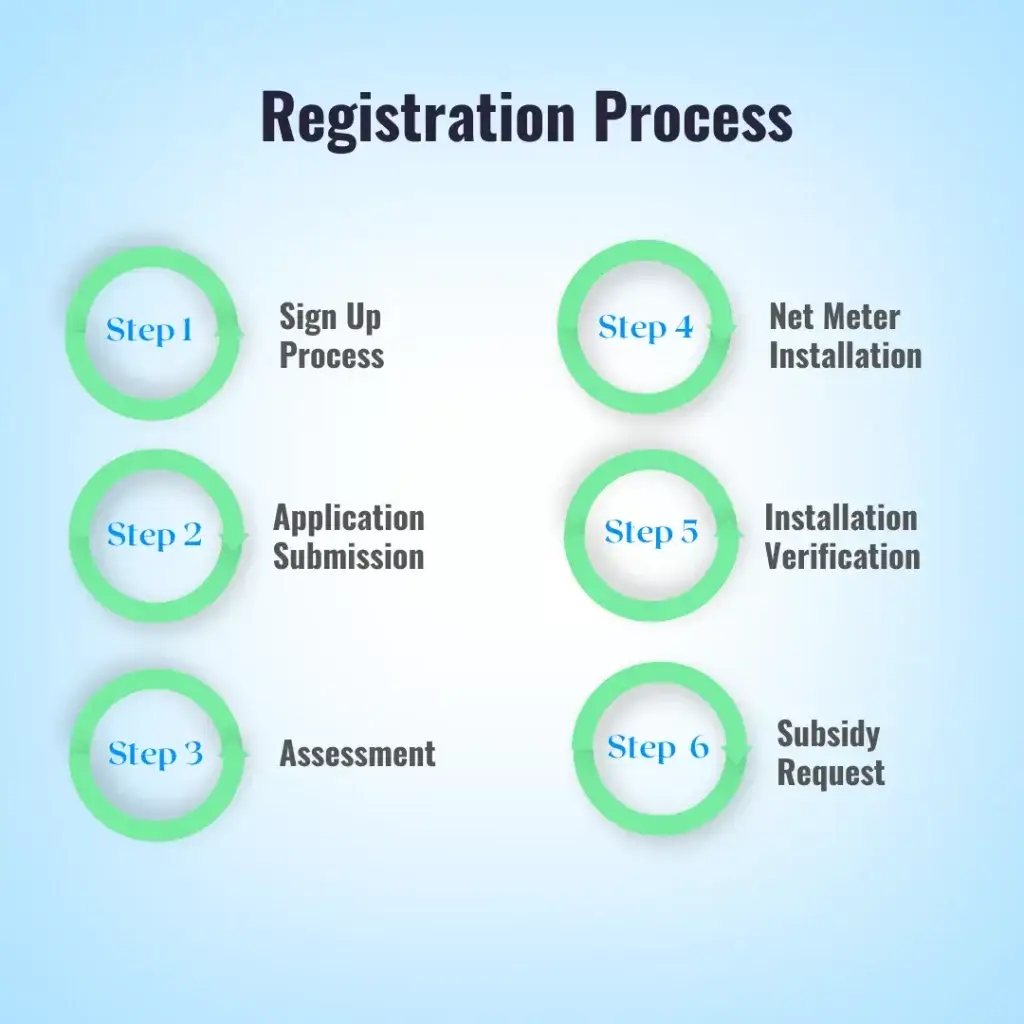
Applying for the PM Suryoday Yojana
If eligibility seems fulfilled, here's a general application process overview:
- Visit the official website to sign up using your consumer number, mobile, and email. Sign up for the PM Surya Ghar Yojana online.
- Once registered, submit a rooftop solar installation request under the scheme. Navigate to the application section and apply.
- Your application will be assessed for technical feasibility by the concerned DISCOM. They’ll verify if your rooftop is suitable for solar panel installation.
- When your solar system setup is done, give details about it. Do this to apply for a net meter with your local power company (DISCOM). A net meter counts the extra electricity your solar panels make so you can earn credits.
- DISCOM folks will check your installation. If it passes, they’ll put a thumbs up on the system through program records.
- After the okay, request subsidy money offered in the program.
This shows typical steps, but procedures may change based on your state's rules. Check the official program website and DISCOM for the latest info. Also, check for any other required actions.
Financial Considerations of PM Surya Ghar Yojana
- Subsidy: The total program expenses vary based on the size of the home solar system. Let’s look at key points. The government provides support through subsidies to reduce initial costs. The subsidy amount differs per system capacity. It ranges from Rs. 30,000 for 1 kW to Rs. 60,000 for 2 kW systems.
- Homeowner Contribution: Despite subsidies, homeowners must contribute some amount. A 3-5 kW setup for an average household may require Rs. 1.5 lakh to Rs. 3.5 lakh out-of-pocket
Here are some examples to illustrate potential savings:
Consider these scenarios highlighting potential savings:
- With High use- For a home using 300 units monthly, a 3-kW system can eliminate the entire electricity bill – that’s around Rs. 1875 saved every month.
- With moderate use – Say 100 units monthly, installing a 3 kW system may generate enough energy to cover your needs. You could even export the excess, based on your state’s net metering policy.
Here are some examples to illustrate potential savings:
- Synergy with PMUY: – It combines PMSY and Pradhan Mantri Ujjwala Yojana (PMUY). It offers a fully clean energy solution. The government subsidizes LPG connections through PMUY. These, plus solar energy, allow rural homes to cook and light more cleanly.
- Skill Development with DDU-GKY: – We collaborate with Deen Dayal Upadhyaya Grameen Kaushalya Yojana (DDU-GKY). It provides training for solar panel setup and upkeep. This creates a skilled workforce ready for PMSY projects.
Conclusion
The PM Suryoday Yojana lets people use solar power. With solar panels, you won't need to buy as much electricity from companies. This saves money and helps the environment by creating less pollution. The government gives money to help pay for the solar systems. If your home qualifies, you can get solar panels installed at a lower cost. Explore the PM Suryoday Yojana website to see if you're eligible. Switch to clean, renewable solar energy. Cut your electricity expenses. Do your part for a greener planet. It's a smart choice for your finances and the future.
Frequently Asked Questions (FAQs)
- You must meet income limits set by state. Also, they have a roof suitable for solar panels. And no past solar subsidies.
- Lower electricity costs from clean energy. Get government subsidy for installation. Some states let you sell extra power.
- Upfront solar system cost varies based on size. Government subsidizes Rs 30,000-60,000. Out-of-pocket is around Rs 1.5-3.5 lakh.
- Potential savings depend on your usage and state’s net metering rules. High consumption homes could eliminate bills entirely.
- Here’s the process: First, visit the official website and review the guidelines from your local electricity provider. You’ll need to complete an online registration form and schedule a feasibility assessment. Once approved, you can select a certified vendor to install your net meter. After that, submit the required documentation to request the subsidy amount